Double Jump Gaming News
Bringing you all your UW-Whitewater Gaming and Esports News

Rust: The Game Where You Can Lose Everything
Article by: Derek Brown
Imagine waking up on an island with absolutely nothing. You have no food, no shelter, no weapons, and barely any clothes. The only things you are given are a rock and a torch. Somewhere else on the island, dozens or even hundreds of other players are starting in the same situation. Some may leave you alone, some may offer to help, and others may kill you before you even figure out where you are.
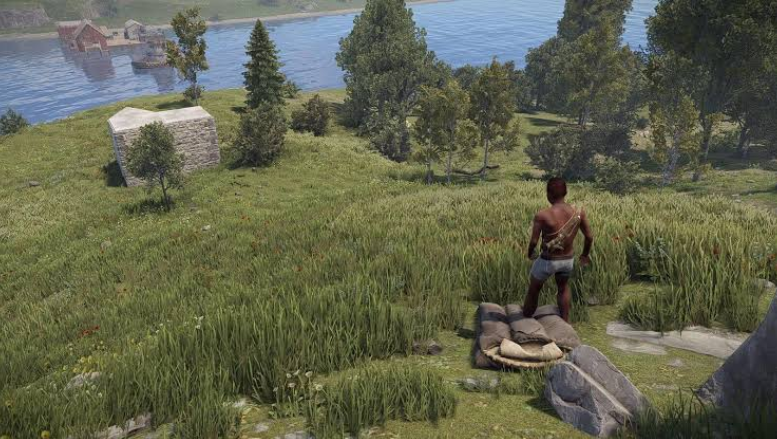
This is the basic idea behind Rust, an online multiplayer survival game developed by Facepunch Studios. Unlike many popular games, Rust does not give players a clear storyline or a list of missions to complete. There is no final boss to defeat or campaign to finish. Instead, players load into a large open world and are given one simple objective: survive. How they accomplish that is completely up to them.
Start From Nothing
Every player begins with almost nothing, which makes the first goal fairly simple: gather resources. Players can use their rock to hit trees for wood and break apart stones for materials. These resources can then be used to craft basic tools, weapons, clothing, and eventually a base.
Every player begins with almost nothing, which makes the first goal fairly simple: gather resources. Players can use their rock to hit trees for wood and break apart stones for materials. These resources can then be used to craft basic tools, weapons, clothing, and eventually a base.
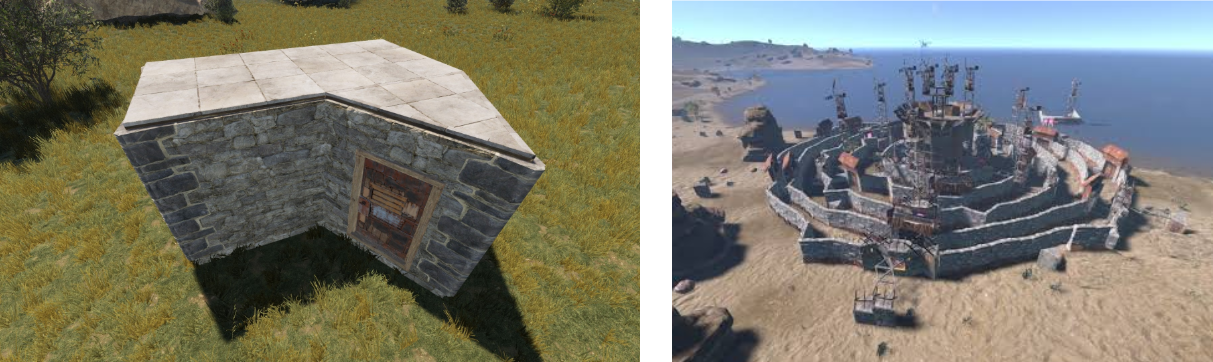
A base is one of the most important parts of Rust. It gives players somewhere to store their items and protects them while they are offline. Bases can range from tiny one-room shelters to enormous compounds surrounded by walls, traps, and automated defenses. As players collect better materials, they can upgrade their base from wood to stone and eventually metal.
At the same time, players are constantly trying to improve their equipment. A new player might begin with a wooden bow, but after hours of progress they could have assault rifles, explosives, armored clothing, vehicles, electricity, security cameras, and other advanced equipment.
The problem is that everything a player owns can be taken away.
Other players can kill you and take whatever you were carrying. Even worse, groups can "raid" your base by using explosives to destroy doors and walls. If they successfully break in, they can steal all of your items and resources that may have taken hours or even days to collect. You can log off at night with a base full of weapons and supplies, only to log back in the next morning and discover that someone destroyed it while you were sleeping.
That possibility is a major part of what makes Rust different from most games.
What Do You Actually Do in Rust?
Although survival is technically the objective, there is no single correct way to play. Players create their own goals depending on what they enjoy.
One of the most common activities is player-versus-player combat, usually called PvP. Players fight over weapons, resources, territory, and valuable locations around the map. Winning a fight can completely change your situation because you are able to take everything the defeated player was carrying. Someone who leaves their base with a basic weapon could return ten minutes later carrying valuable guns and equipment after winning a fight.
Players can also explore monuments, which are locations around the map containing valuable loot and challenges. Some areas are relatively safe for newer players, while others contain radiation, hostile NPCs, puzzles, or heavily armed opponents. Oil rigs, military tunnels, launch sites, cargo ships, and other locations can offer some of the best loot in the game, but going to them also means risking the equipment you have already spent time gathering.
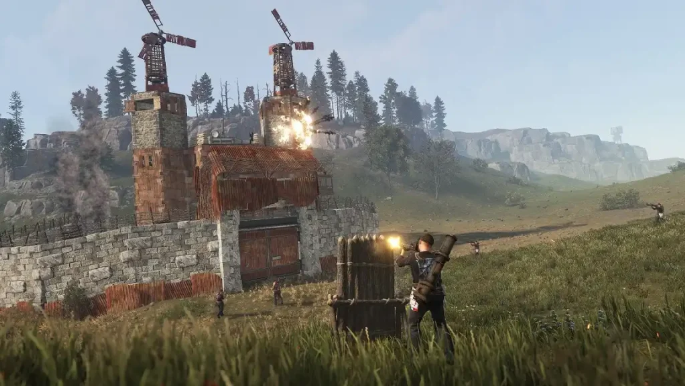
Raiding is another major part of Rust. Players collect or craft explosives such as rockets and satchel charges and use them to break into another player's base and take all of their loot. A successful raid might give a group enough resources to dramatically speed up their own progress, while an unsuccessful raid can waste hours of preparation and resource gathering.
Not everything in Rust has to involve fighting, either. Some players build massive bases, create farms, set up electrical systems, drive cars, fly helicopters, fish, run shops, gamble, or simply interact with other players. Someone might build a heavily defended military compound, while another person on the same server could open a store and sell items to their neighbors.
That freedom means that much of the entertainment comes from the players themselves rather than something the game specifically tells them to do.
Why Is Rust So Addictive?
One of the biggest reasons players can spend hundreds or even thousands of hours in Rust is the amount of risk involved in almost everything they do. In many games, dying means waiting a few seconds and respawning with the same equipment. In Rust, dying can mean losing everything you were carrying. If you spend an hour collecting resources and another player kills you on the way home, that player can take all of it.
Because of this, even basic situations can become surprisingly intense. Hearing footsteps outside your base can make you wonder whether someone is preparing to attack you. Traveling across the map with valuable loot can feel stressful because one unexpected gunshot could erase the last hour of progress. Winning a fight is exciting not only because you defeated another player, but because you know exactly what was at risk.
This creates a constant cycle of risk and reward. Players gather resources so they can get better equipment. Better equipment allows them to take bigger risks. Those risks can lead to even better loot, which then needs to be protected. There is almost always another upgrade, raid, fight, or project to work toward.
The social side of the game makes this cycle even stronger. Rust servers develop their own temporary communities. Players make alliances, start rivalries, betray each other, trade resources, and sometimes spend days fighting the same neighboring group. A random interaction with another player can turn into an alliance that lasts the entire wipe, or a rivalry that leads to both groups repeatedly raiding each other.
These unpredictable interactions create stories that would be difficult for a developer to script. A player might spend hours preparing to raid an enemy, only to discover that another group attacked them first. A stranger you helped on the first day might return the favor several days later. Someone pretending to be friendly could wait until you open your door and immediately turn against you.
You rarely know exactly what is going to happen when you log in.
The Wipe Changes Everything
Another unusual part of Rust is that progress is temporary. Servers regularly "wipe," meaning the map and player-built structures are reset. Depending on the server, this might happen weekly, biweekly, or monthly.
At first, losing all of your progress might sound frustrating. However, wipes are actually one of the reasons players keep returning. A fresh wipe puts everyone back at the beginning. Huge compounds disappear. Players who had boxes filled with weapons are once again collecting wood and stone. The first hours of a wipe become a race as groups compete to build bases, unlock better equipment, and gain control of important areas first to get ahead of the competition.
Because everything eventually disappears, Rust is less about permanently completing the game and more about what happens along the way. Each wipe creates a new set of neighbors, enemies, alliances, fights, raids, and stories.
More Than a Survival Game
On the surface, Rust is a game about gathering resources, building a base, finding weapons, and surviving. However, those mechanics only explain part of its popularity. What makes the game stand out is how much freedom players have and how much their actions can matter.
A successful fight can save hours of work. A bad decision can destroy days of progress. A friendly encounter can create an ally, while one argument can start a rivalry that lasts for the rest of the wipe. Even when players think they have everything under control, another person can completely change their plans.
There is no real way to "beat" Rust. Eventually, the server wipes and everything starts again. For many players, that is exactly the point. The goal is not necessarily to reach the end, but to see what happens before everything is gone.