Double Jump Gaming News
Bringing you all your UW-Whitewater Gaming and Esports News

140 - The Platformer that Dances
Article by: Victor Anderson
In my eighth year of playing clarinet I was watching someone play Guitar Hero in an arcade and I found myself bored, then appalled. Growing up with the Wii Fit I loved rhythm games, but now I had spoiled myself of them. Sure, they can be a great way to move your body while gaming, but at the end of the day they’re exactly the same as playing an instrument. A sheet on your music stand (screen) tells you what keys (buttons) to press next and you make music. Besides the fact that they’re played with a controller, nothing about them made me see them as a true video gaming experience anymore.
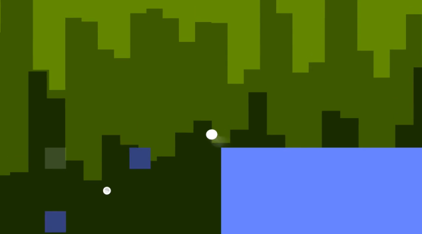
140 gets its name from all of its tracks having 140 beats per minute, a pretty typical tempo for the Electronic Dance Music it is inspired by.
But what if there was a game of music instead of ‘playing music in game format?’ Meet 140, the platformer that literally dances. A creation of Jeppe Carlsen, one of the designers for Playdead’s LIMBO, 140 combines classic style platforming with rhythm-timed elements. Each level starts out with a minimalistic soundscape and basic design, but as you find spheres to progress, new layers of music appear and more game elements are unlocked that pair with them. Though the concept is quite simple, music being so integral to the gameplay allows players to enter a flow state while still having to think about their next move, while also making for a stunning full sensory experience.
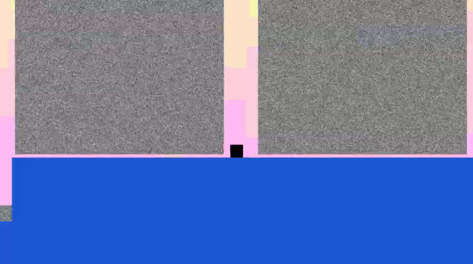
Caught between two expanding blocks as the melody turns into a drone.
If players want to survive in 140, they need to listen to their surroundings as much as look. The moving game elements are synched to the melody, and timing your movements one beat wrong can mean disaster. Though at times the challenges may frustrate new players, they are never without rhyme or reason. Counting music is a skill that can be learned, and 140 is an excellent teacher. The game introduces simple concepts first, like jump pads with loud audio cues and a 4-beat windup time, before gradually working up to more complex concepts. And it isn’t that new mechanics are being thrown at the player, but instead are spinning off things featured in prior levels. Those jump pads may turn to harmful static for a beat, and blocks that move on the beat might now be syncopated and go on a half rest or pickup note. This balance makes 140 a fun time for both gamers and music nerds well-versed in technical detail. And when a player can take what they’ve learned throughout the game and use it to beat the final challenge, there are few experiences as rewarding as that.
But what makes 140 most memorable is how the music is baked in thematically from the very beginning. In another minimalistic music game, Just Shapes and Beats, the audio is a mere backing track for the overwhelming flashing lights and button-mashing bullet hell. Not to say the beats aren’t helpful, but the beats to shapes ratio makes it more of a visual experience than a musical one. 140 handles its musical cues so much better because not only is the game a near unplayable experience without them, but it is the game. The background is a decibel scale that shifts and grows as the soundtrack gets more intense, and the musical style remains faithful to its EDM roots all the way through rather than each level switching to a new genre. And echoing through every level somewhere are hints of the main theme song, guiding the player toward their final destiny.
Stardew Valley is simplistic in it’s design, but if you dig deep enough you can find a rich and rewarding game. Whether you want to farm and build a family of your own, or you’d rather go out adventuring and looking for treasure, it is truly your own prerogative. Either way, you will find yourself simply lost in this world. Whatever you choose to do, the game encourages you to be the best you can be and simply take in the joys and wonders of your life.
140 is a true test of hand-ear coordination, seamlessly blending music and video games as art forms together into one experience. It brings the simplest of concepts to life and can show both players and casual observers a great deal about how design can make a rhythm game brilliant. The only thing I wish this game had was more levels!.
The Official Sound Track for 140 can be hard to find… Here is a quick link