Double Jump Gaming News
Bringing you all your UW-Whitewater Gaming and Esports News

ENA: Dream BBQ and the old web
Article by: Victor Anderson
In the massive selection of video games to choose from nowadays, it’s a guarantee that one will at some point stumble upon something weird. The wild dreamscapes of Psychonauts, early game jams like Enviro-Bear 200, and the mayhem that is Octodad are all contenders for the most unusual games I’ve experienced. But if you want an experience that’s both profound yet barely intelligible, then you’d best turn to ENA: Dream BBQ.
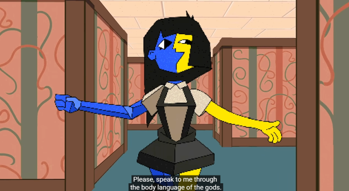
Some classic ENA moments (animated)
Originally an animated short series on Youtube, ENA was Peruvian creator Joel Guerra’s most ambitious project. He had begun his career with Undertale content in 2016, and his own music-timed animations after that gained him a niche following. ENA soon became the thing that really put him on the map for being one of the first fully developed ‘webcore’ shows, a genre designed around the nostalgia of defunct browser games and old Windows XP apps. The titular polygonal protagonist explores worlds that look like abandoned personal websites, searching for her missing boss and the legendary genies with the ‘help’ of her insane co-workers.
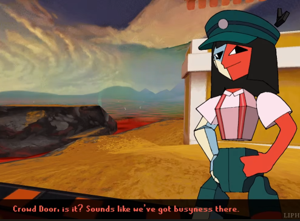
Some classic ENA moments (in-game)
A celebration of the internet’s earliest days, the style of ENA is not bound by genre, sense, or even language. Players are just as likely to be cussed out by a pixel art Korean mime as they are to pet the photorealistic snake-head of an airship whose speech on transporting goods has been run through Microsoft Sam. The busy world and bright colors makes the whole thing feel like it could be a cut episode of The Amazing World of Gumball where anything could happen. Though both main quests and secret routes do a solid job guiding the player through the confusing world, it’s often hard to make sense of how what you’re doing will get you closer to the goal. For someone as easily amused as myself I found the illogical and rambling plot of ENA hilarious, but those who need to understand every bit about the media they interact with may become frustrated. It truly is a go-with-whatever sort of game, where throwing things at the wall and seeing if they stick is just as acceptable as following the more obvious path.
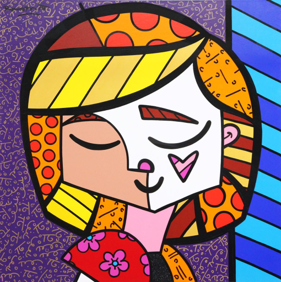
Guerra cites the work of Romero Britto as a key inspiration for the design in ENA.
What made ENA stand out though was not just the nostalgic and unsettling feel, but that it was one day destined to be a video game long before Guerra opened his Patreon. In the show, the camera is often moving with ENA in a first-person style, making it feel like a point-and-click adventure rather than a traditional puppet rigged animation you’d see on Cartoon Network. Characters that are spoken to have their own intro and outro ‘sequences’ as though loading an exhausted dialogue package rather than just walking offscreen. Full of flashy popup windows, dramatized voice dubs, and low-resolution 2D effects, it’s clear that every bit of ENA was designed with retro video games in mind.
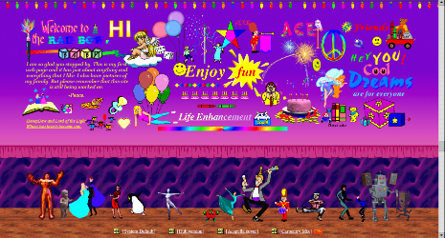
cameronsworld.net, a Geocities archive, which many players compare ENA to.
For those who can look beyond the strict limitations of taste that triple-A studios have set, you can see why ENA had both millennial and GenZ players raving about it from the very beginning. In all its chaotic glory, ENA is a masterpiece of graphic design and a true love letter to the utter creative wackyness that was the old web. Both the youtube series and game are ongoing, so stay tuned for whenever you feel that itch to fire up the old fax machine or go light a fresh stick of incense for your toilet shrine.